
Dome Fire burns more than 5,200 acres as smoke and closures disrupt fall visits
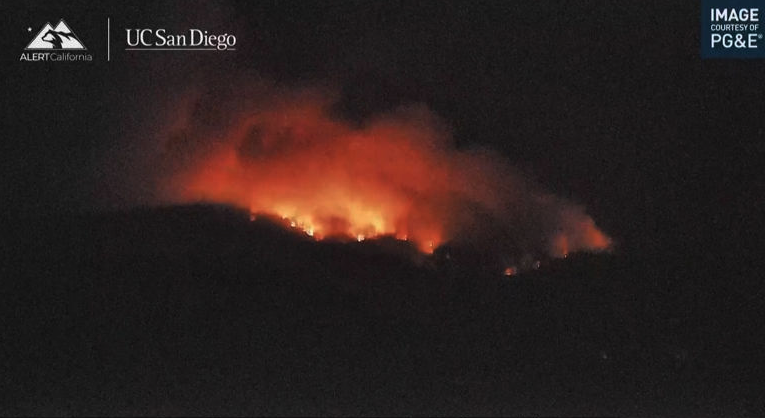
The Dome Fire burning in Yosemite National Park has grown to 5,215 acres and was 30 percent contained Monday morning, continuing to send smoke across parts of the park and forcing closures that have disrupted fall travel in southern Yosemite and nearby Mariposa County.
The fire, first reported at 8:28 a.m. Sept. 15 north of Wawona Dome near the Chilnualna Falls area, is burning in steep wilderness terrain under the jurisdiction of the National Park Service. CAL FIRE listed the cause as a campfire in its latest incident information, though earlier updates described the cause as under investigation.
Yosemite remains open, but the fire has closed Glacier Point Road, the Chilnualna Falls Trail, the Ostrander Trail and several connected backcountry routes. The Mariposa-Yosemite Airport has also been closed to general aviation traffic because of firefighting operations. Park officials have said no roads, buildings, utilities or developed areas are under immediate threat, and no evacuation orders or warnings were in place in recent updates.
Community events scheduled to be held at the Mariposa County Fairgrounds have had to be cancelled or rescheduled as the federal fire camp occupies the entire facility.
Fire crews have been working from the ground and air, building and widening lines near Bridalveil Creek, Empire Meadows and Horse Ridge. Helicopters and pack mules have been used to move water, food, fuel and equipment into areas where vehicle access is limited. The fire has generally been moving north and northeast into the footprint of the 2017 Empire Fire, where granite outcrops, rocky terrain and previously burned areas have helped slow its advance.
Containment has improved gradually since the fire’s first days. The blaze was reported at 1,177 acres with no containment on Sept. 16, reached 15 percent containment later in the week, rose to 28 percent by Sept. 26 and stood at 30 percent by Sept. 28. Fire officials have cautioned that containment means portions of the perimeter are secured, not that the fire is extinguished.
Smoke has been one of the most widespread effects. Depending on wind and inversion conditions, smoke has affected Wawona, El Portal, Yosemite Valley, Tuolumne Meadows and surrounding communities. Recent forecasts have called for conditions ranging from good to moderate in some areas, with periods unhealthy for sensitive groups when smoke settles or drifts through the park.
The closures and smoke come during a busy fall travel period, when Yosemite draws visitors seeking cooler weather, lighter crowds and high-country scenery. Although the park has not shut down, the fire has complicated trips for hikers, backpackers, tour operators and visitors who planned to use Glacier Point Road or southern wilderness routes.
In Mariposa County, where local businesses rely heavily on Yosemite tourism, the economic effects are expected to be uneven. Lodging properties, restaurants, guide services, retailers and gas stations in communities such as Wawona, Yosemite West, El Portal and Mariposa can lose business when visitors cancel or shorten trips because of smoke, uncertainty or trail closures. At the same time, firefighting operations can bring temporary demand for rooms, meals, fuel and supplies.
The net economic impact will depend on how long the fire burns, whether smoke worsens, and how quickly heavily visited areas reopen. For now, officials have emphasized that Yosemite remains accessible, but businesses tied to recreation and fall visitation face continued uncertainty as travelers weigh changing conditions.
No official public estimate of wildlife losses has been released. Wildlife experts generally caution that smaller or less mobile animals are most vulnerable to direct fire and smoke, while larger animals may flee but face displacement, reduced forage and altered habitat. The full ecological effects will depend on burn severity, the extent of repeated fire in areas previously burned by the Empire Fire, and future weather that could affect erosion and stream conditions.
The Dome Fire is burning through a mix of grass, brush, timber, litter and understory in rugged terrain. While fire can reduce fuels and create habitat diversity over time, severe burns can damage soils, kill mature trees and increase post-fire erosion risk. Fire managers are balancing suppression efforts with the challenges of working in Yosemite Wilderness, where steep terrain and limited access slow line construction.
Officials said cooler temperatures and higher humidity have helped crews in recent days, though gusty winds and spot fires remain concerns. Visitors and residents were urged to check Yosemite National Park, CAL FIRE, InciWeb, county emergency updates and air-quality advisories before traveling or spending extended time outdoors.
Comments