
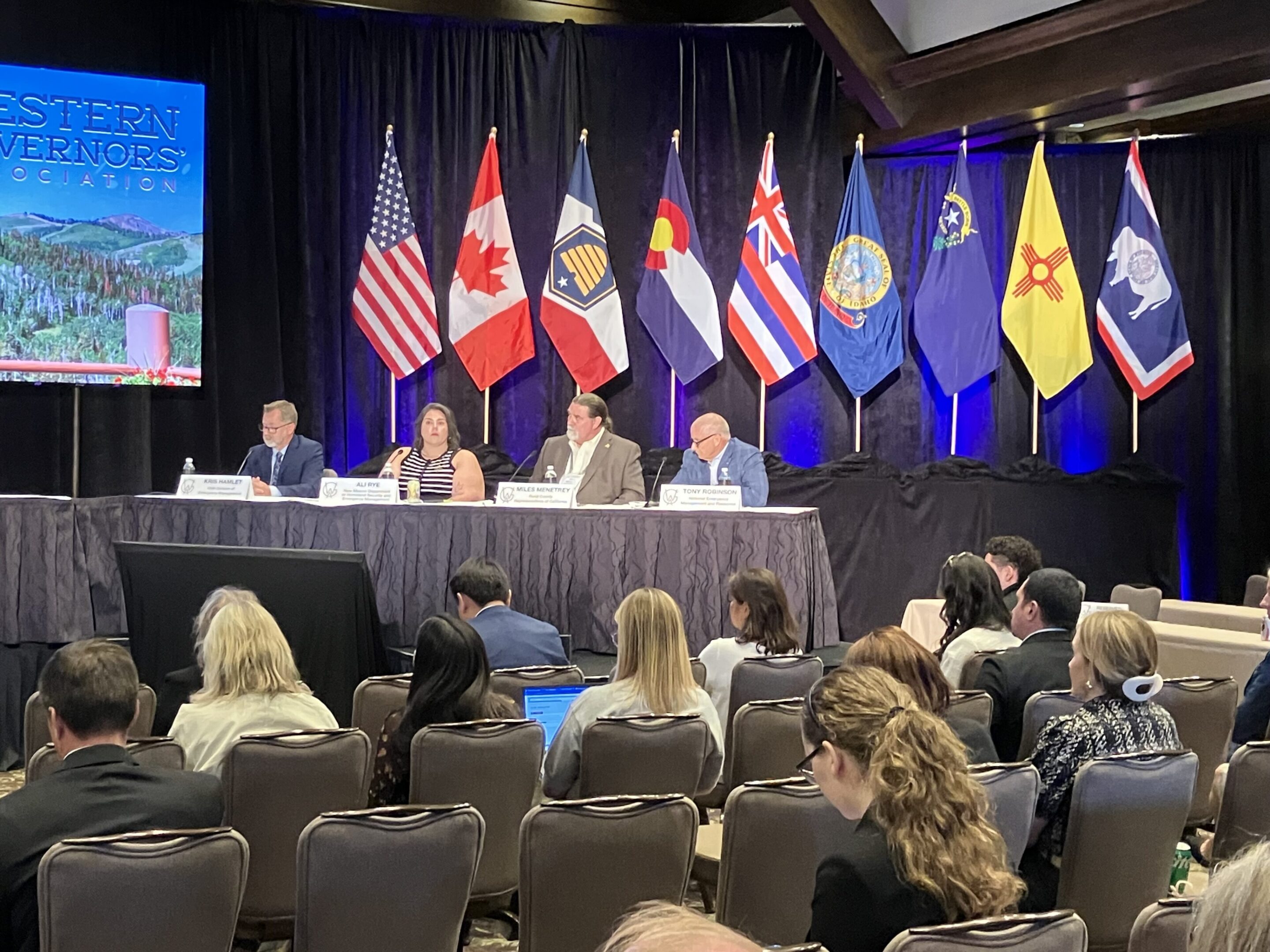
Supervisor Menetrey invited to speak at Western Governors’ Association conference
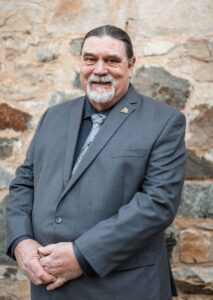
Miles Menetrey, Mariposa County Supervisor, District 5. (File photo)
Mariposa County District 5 Supervisor Miles Menetrey recently brought a rural California perspective to a multi-state audience after being invited to speak at the Western Governors’ Association annual meeting in Park City, Utah.
Menetrey attended the conference, held June 30 through July 2, after receiving an invitation to participate in a panel discussion on a federal report examining the operations of the Federal Emergency Management Agency. None of his expenses were paid by Mariposa County.
Menetrey currently serves as chairman of the Rural County Representatives of California, known as RCRC. He also holds one of California’s three seats with the National Association of Counties, representing a rural county, and has served in that role for the past six years. The national organization represents 3,069 counties.
“I just got an email out of the blue about a week and a half before the meeting,” Menetrey said. “They asked me if I could come and present a western rural county perspective on a special report about the operations of the Federal Emergency Management Association (FEMA) that was requested by the Trump administration,” Menetrey explained. The WGA requested a panel review of the report on FEMA from the president’s council and an analysis of the governors’ response to the report.
Menetrey served on the panel alongside Ali Rye, head of the Office of Emergency Services and State Director of Homeland Security for New Mexico; Kris Hamlet, director of Utah’s Office of Emergency Management; and Tony Robinson, a former FEMA director who now leads National Emergency Management, a company he founded after leaving the agency.
During his 10 years as a county supervisor, Menetrey has also worked on federal natural resources issues, with a particular focus on forest resiliency and improving U.S. Forest Service management practices.
“When I spoke, I shared some of the thoughts I had from a county perspective that I think should looked at. It was really an experience, to be there with these governors. There was a strong bi-partisan atmosphere and comradery,” Menetrey said.
Menetrey said he used Mariposa County’s recent history with disasters to illustrate the challenges facing small counties.
“I explained that here in Mariposa County during my tenure on the board there have been 18 declared local emergencies. Eight fires, six atmospheric rivers and associated flooding events, Covid, and what a lot of people refer to as ‘snowmagedon,’ just a few years ago,” Menetrey added. “Any of those events can be a disaster for a small county and it’s hard to qualify for assistance.”
The District 5 supervisor said public land management remains a central concern for Mariposa County, where 61 percent of the land is publicly owned. He said that reality complicates emergency response and fire management.
“There have been instances when the forest service thought that a wildland fire should be allowed to continue to burn in an area that hasn’t experienced fire for quite some time. They want to see the undergrowth cleared out to prevent future fires, but I’ve seen a number of these fires get out of control, and we need immediate response to these fires on public land. CAL Fire does a great job of responding quickly to fires in their state responsibility areas, but I think the forest service needs to be more responsive,” Menetrey stated.
Menetrey also raised concerns about federal disaster-recovery rules, particularly requirements that damaged infrastructure be restored to its previous condition rather than upgraded for long-term resilience.
“One of the other things I mentioned is when you get FEMA assistance, they have a requirement that the infrastructure must be replaced or repaired ‘as it was.’ That doesn’t make any sense to me. We have some wooden bridges in this county. Is it realistic to replace that with another wooden bridge?” Menetrey questioned.
He said rural counties also face difficulty qualifying for federal assistance because of how disaster thresholds are calculated.
“Another thing that we wrote in response to the federal report addressed point number eight. In less populated areas, it’s tough to qualify for assistance because the county income is compared to the total income of the state,” Menetrey noted. “Of the 58 counties in this state, 40 are members of the RCRC, and to qualify the county has to have a population of less than 600,000. The land mass represented by the RCRC is 61 percent of the state’s total, but those 40 counties only contain 14 percent of the state’s population. That makes it much harder for smaller counties to meet the FEMA thresholds for assistance.”
Officials at the Mariposa County Sheriff’s Office report that Mariposa County received FEMA assistance for two recent events. FEMA DR-4683 refers to the major disaster declaration for California issued on Jan. 14, 2023, due to severe winter storms, landslides and mudslides that began on Dec. 27, 2022. That declaration allowed FEMA to aid individuals and households affected by those disasters.
Additionally, FEMA DR-4699 refers to the federal disaster declaration for California due to severe winter storms (better known locally as “snowmagedon”), straight-line winds flooding, landslides and mudslides that occurred starting Feb. 21, 2023. That declaration allowed FEMA to aid individuals and households affected by those disasters.
Counties do not apply directly to FEMA for assistance. Instead, they submit disaster data to the state, which then applies to the federal government for relief.
Menetrey said the invitation gave him an opportunity to represent rural counties before a regional group of governors and emergency-management leaders.
“It was an honor to be there. RCRC paid for the conference registration because I was a speaker and it covered by hotel and flight,” Menetrey added.
RCRC advocates for the interests of rural counties in California and works on issues including land use, water resources, public safety and community services.
The WGO consists of 22 western states. Attending this annual conference were Utah Governor Spencer Cox, Hawaii Governor Josh Green, Colorado Governor Jared Polis, Idaho Governor Brad Little, Nevada Governor Joe Lombardo, New Mexico Governor Michelle Lujan, and Wyoming Governor Mark Gordan.
The keynote address was from U.S. Forest Service Chief Tom Schultz, who emphasized the urgent need for active, collaborative forest management as the West faces an increasingly severe wildfire season. He honored three firefighters killed in a recent Colorado burn-over, outlined the agency’s progress on agency hiring and hazardous-fuels treatments, and stressed that wildfire risks, forest health, watersheds, recreation, rural economies, and energy development all cross jurisdictional boundaries.
Comments