
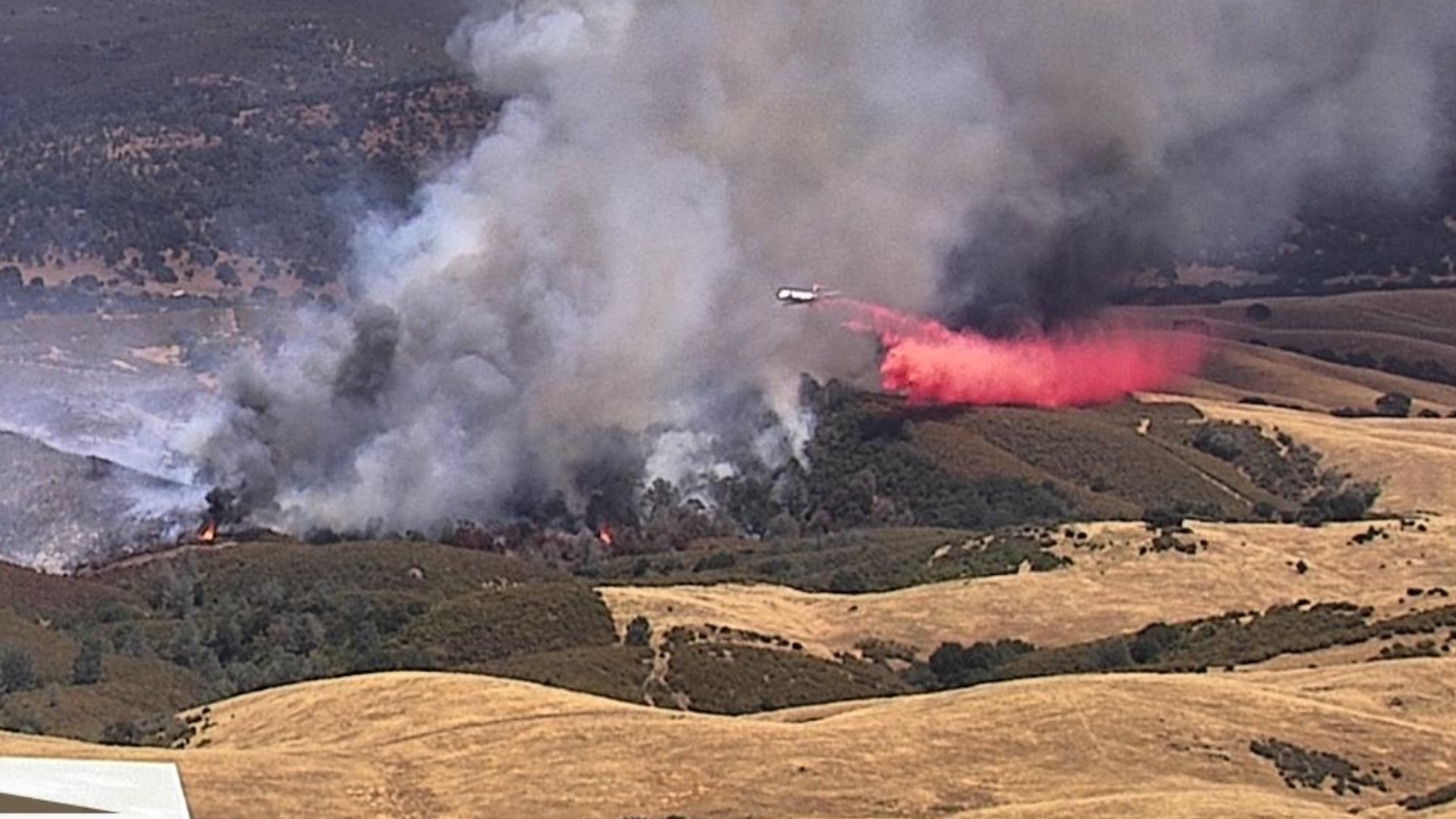
Gann Fire leaves death and destruction in Calaveras County
VALLEY SPRINGS — The Gann Fire, a fast-moving blaze that broke out Monday evening, Aug. 3, near Hogan Dam Road and Gann Road, had burned more than 10,000 acres in Calaveras County by Saturday and left at least one person dead as firefighters continued working through rugged, heat-dried terrain.
As of Saturday, Aug. 8, the fire had scorched 10,374 acres and was 54% contained, according to CAL FIRE. Evacuation orders and warnings remained in place in several areas, though some residents were being allowed back into neighborhoods where crews had reduced immediate danger.
The fire has already become one of the most destructive recent incidents in Calaveras County. CAL FIRE reported 18 structures destroyed in an earlier update, while local reports later cited officials saying 22 structures had burned. Officials also reported at least one firefighter injury and one civilian death after a body was found in a burned home in the Angels Camp area. Other reports said minor firefighter injuries were treated at the scene. Because the incident was still active, final damage and injury totals may change.
Investigators said the fire began after spark-producing equipment was used in dry vegetation without required precautions. A 65-year-old Valley Springs man, Herbert Wayne Smith, was arrested on suspicion of recklessly causing the fire, and the case was forwarded to the Calaveras County District Attorney’s Office for review. State and local emergency declarations brought additional resources to the firefight as crews worked on containment lines, mop-up, hazard removal and suppression repair.
The Gann Fire’s toll is significant locally, but a review of major wildland fires in the central Sierra foothills over the past 12 years shows that Calaveras is part of a broader regional pattern. In Calaveras County, the Gann Fire itself now qualifies among the area’s major fires, with more than 10,000 acres burned, at least 18 to 22 structures destroyed, one reported civilian death and firefighter injuries reported as crews continued suppression work.
In Mariposa County, three fires of at least 5,000 acres stand out since 2014: the Detwiler Fire in 2017, the Ferguson Fire in 2018 and the Oak Fire in 2022. Together, those fires burned nearly 198,000 acres and destroyed at least 337 structures, with the Ferguson Fire also killing two firefighters, including local dozer operator Braden Varney, and injuring 19.
Madera County has seen a comparable number of qualifying large fires during the same period, but with one incident that far exceeded the others in size and destruction. The French Fire burned 13,838 acres in 2014, the Willow Fire burned 5,702 acres in 2015 and the Creek Fire exploded across Fresno and Madera counties in 2020, burning 379,895 acres and destroying 856 structures. The Creek Fire also resulted in 26 civilian injuries, according to incident records, though no fatalities were listed in the reviewed summary.
Tuolumne County had fewer qualifying fires in the reviewed period. The Donnell Fire burned 36,450 acres in 2018, and the lightning-caused 6-5 Fire burned 7,037 acres in 2025, destroying 95 structures near Red Hills and Chinese Camp. Based on the records reviewed, Mariposa County has experienced more large wildland fires than Tuolumne County and Calaveras County during the period reviewed, but not significantly more than Madera County. And when destruction is measured by acreage and structures lost, Madera’s Creek Fire remains the dominant outlier in the region.
That comparison places the Gann Fire in a broader foothill pattern: communities across Calaveras, Mariposa, Madera and Tuolumne counties have repeatedly faced fires large enough to overwhelm local resources, force evacuations and leave long recovery lines behind. Mariposa’s fire history is severe and persistent, particularly around Yosemite and the Highway 140 corridor, but the available record does not support a conclusion that it has suffered a clearly disproportionate number of large fires or the greatest destruction among the counties reviewed.
Comments