
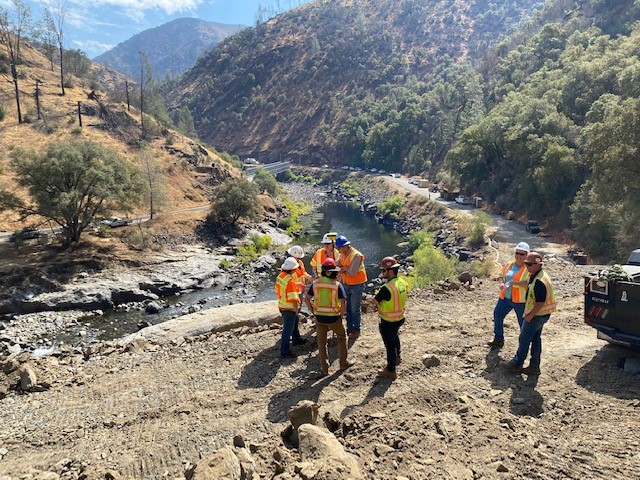
Highway 140 Ferguson Rock Shed Project moves from long delay to visible construction
By Dan Tucker
Two decades after the Ferguson Rockslide forced traffic off a damaged stretch of State Route 140 near Yosemite National Park, Caltrans District 10 is advancing a permanent fix: a massive rock shed designed to reopen the highway’s original two-lane alignment and protect travelers from future rockfall.
The project reached a visible milestone in this month when crews completed the first concrete pour, allowing work to move forward on the long-planned Ferguson Rock Shed. Current reports describe the project as active and progressing, with completion expected around 2030.
From Emergency Bypass to Permanent Reconstruction
The Ferguson slide occurred in 2006 after a wet season destabilized the steep Merced River canyon slope. The slide buried a section of Highway 140 west of El Portal and cut off the main year-round approach to Yosemite. After failed attempts at removing the slide, Caltrans installed temporary bridges that shifted traffic across the Merced River and around the slide, but the bypass has remained a constrained, one-lane solution far longer than originally intended.
For residents, businesses, freight operators, emergency responders, park visitors, bicyclists, and commuters, the temporary route has meant delays, traffic controls, and reduced reliability on a corridor that links Mariposa, El Portal, Midpines and Yosemite National Park.
What Caltrans Is Building
Caltrans’ permanent solution is a roughly 675-foot-long protective rock shed built along the original Highway 140 alignment. The structure is planned with an interior width of about 40 feet and is designed to shield the roadway from future rockfall while restoring two-way traffic through the Ferguson Slide area.
The work has been divided into major phases. Phase 1 focused on removing talus material from the slide zone, installing cable-net drapery, using real-time monitoring equipment, and improving slope stability. That phase included the removal of hundreds of thousands of tons of material and was completed before the rock shed construction phase began.
Phase 2 is the rock shed itself. Caltrans describes the structure as unusual because it will use pre-cast concrete segments that are jacked into place around a curve. The design includes a restraining base anchored into the slope with rock anchors and concrete micro piles, reflecting the scale and complexity of building in an active rockslide zone above the protected, Wild and Scenic Merced River.
Cost, Schedule, and Funding
Caltrans’ project materials list the rock shed construction cost estimate at about $285 million, with construction scheduled to last roughly five years. Some reports in 2025 said the California Transportation Commission allocated approximately $387.6 million for construction and that total project costs across phases were approaching $450 million.
With construction activity beginning in 2025 and major concrete work underway in 2026, the current schedule points toward completion around 2030, subject to the challenges of weather, terrain, environmental restrictions, and work inside the slide zone.
Why the Project Matters
Highway 140 is one of the principal routes into Yosemite National Park and a critical link for Mariposa County communities. Restoring the original alignment would remove the long-running temporary bridge detour, improve travel reliability, and strengthen access for tourism, local commerce, emergency response, and daily travel.
The project also reflects a broader transportation resiliency goal: rebuilding a vulnerable mountain highway in a way that acknowledges the canyon’s geology rather than simply clearing the slide and reopening the road. By covering the highway with a designed protective structure, Caltrans aims to create a more durable route through one of the most difficult sections of the corridor.
What Comes Next
As construction continues, the Ferguson Rock Shed will remain one of Caltrans District 10’s most closely watched infrastructure projects. For Mariposa County, the work represents more than a highway repair: it is the long-delayed restoration of a dependable gateway to Yosemite and a test of how California rebuilds transportation corridors in unstable terrain. Similar damage to the state’s key highways, like Highway 1 along the coast of the state, have been addressed and repaired immediately, a complete contrast to this 20-year solution to the Ferguson slide.
Comments